
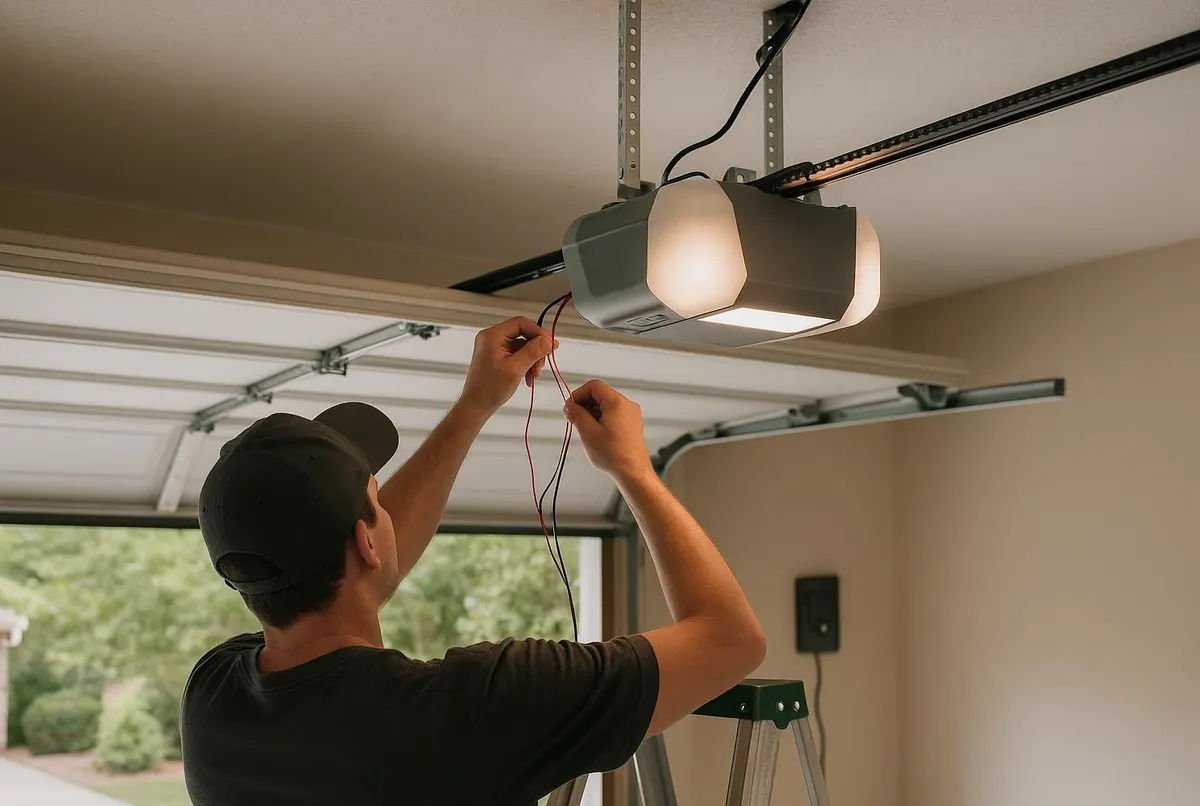
Rule of thumb: if you can do it with a flashlight and a screwdriver, it's a homeowner job; if it involves the springs, cables, or the opener's force settings, it's a technician job. The exceptions: anything that requires removing a panel, adjusting torsion spring tension, or working near a door that won't stay open on its own — those carry real injury risk even for handy homeowners, so they go on the "call someone" list no matter how simple they look.
With that split in mind, here's a seasonal routine that takes about 20 minutes and catches most of the problems that show up after a Gwinnett County summer of heat, humidity, and pollen, right before the colder, drier stretch of winter sets in.
Tools You'll Need
- Work gloves
- A flashlight
- A silicone-based garage door lubricant (not WD-40 or grease, which attract dust and pine debris)
- A socket wrench or screwdriver set
- A soft, dry cloth
- A step stool if your door opener unit is mounted high
The 20-Minute Routine
- Look over the tracks and rollers (3 minutes). With the door closed, run your flashlight along both vertical tracks. Look for dents, gaps between the rollers and track, or buildup of pine sap, pollen film, and grit — common after months of humidity and tree debris settling around the garage opening. Wipe tracks clean with a dry cloth; don't lubricate the tracks themselves.
- Tighten visible hardware (3 minutes). Using your socket wrench, check the bolts on the track brackets and the hinges between panels. Heavy use and the vibration of daily openings loosen these over time. Snug anything that's wiggling, but don't overtighten — stripped holes in the brackets are a technician fix.
- Lubricate moving parts (4 minutes). Apply a light coat of silicone lubricant to the rollers, hinges, and the opener's chain or screw drive. Skip the springs — lubricating those is fine for a technician to do with the right product, but it's not a core homeowner task since you shouldn't have your hands near a loaded spring.
- Run the balance test (3 minutes). Pull the manual release cord to disconnect the opener, then lift the door by hand to about waist height and let go. A properly balanced door stays put. If it drifts down or slams up, the spring tension is off — this is a technician call, not a DIY adjustment.
- Test the auto-reverse safety feature (3 minutes). Reconnect the opener. Place a roll of paper towels or a 2x4 on the ground in the door's path and close the door using the wall button. It should reverse on contact. Also check the photo-eye sensors near the bottom of the tracks — wipe any dust or spiderwebs off the lenses, since reduced sensitivity here is often just dirt, not a wiring issue.
- Check the weatherstripping and bottom seal (2 minutes). Look along the bottom of the door and the sides where it meets the frame. After a season of heavy rain and humidity, seals can crack, flatten, or pull loose, letting moisture and insects into the garage. If it's cracked or no longer sits flush, note it — this is an easy swap a technician can handle quickly, or a motivated homeowner can replace with a standard strip kit.
- Listen during one full open-close cycle (2 minutes). Grinding, popping, or a rhythmic thump usually points to a worn roller or a loose track bracket — things you may have just addressed. A loud bang or a metallic snap, on the other hand, can mean a spring is failing. If you hear that, stop using the opener and call for service rather than testing it again.
Where the Line Is
Everything above is safe for a homeowner with basic tools. The moment a task involves the torsion or extension springs, the lift cables, a bent track that needs realigning, or the opener's internal force and travel settings, hand it off. Springs are under heavy tension and cause real injuries; misaligned tracks and cables can let a door fall unexpectedly.
When to Call Lawrenceville Garage Door
If your balance test fails, you hear a sharp snap, or the auto-reverse doesn't trigger, call us before running the door again. Our Garage Door Maintenance & Tune-Up service covers spring tension checks, track alignment, and opener calibration in one visit, and if a spring has already gone, our Spring Repair & Replacement team carries common sizes for same-week installs across Lawrenceville, Suwanee, and Duluth. We also run emergency service if the door won't close at all and you're searching for a garage door repair near you in Lawrenceville the same day.
Run this checklist once a season, and most of what breaks garage doors in Gwinnett County — rust, loose hardware, and sensor grime — gets caught before it strands you. If anything on this list turns up a red flag, give Lawrenceville Garage Door a call and we'll get a technician out to finish the job right.