
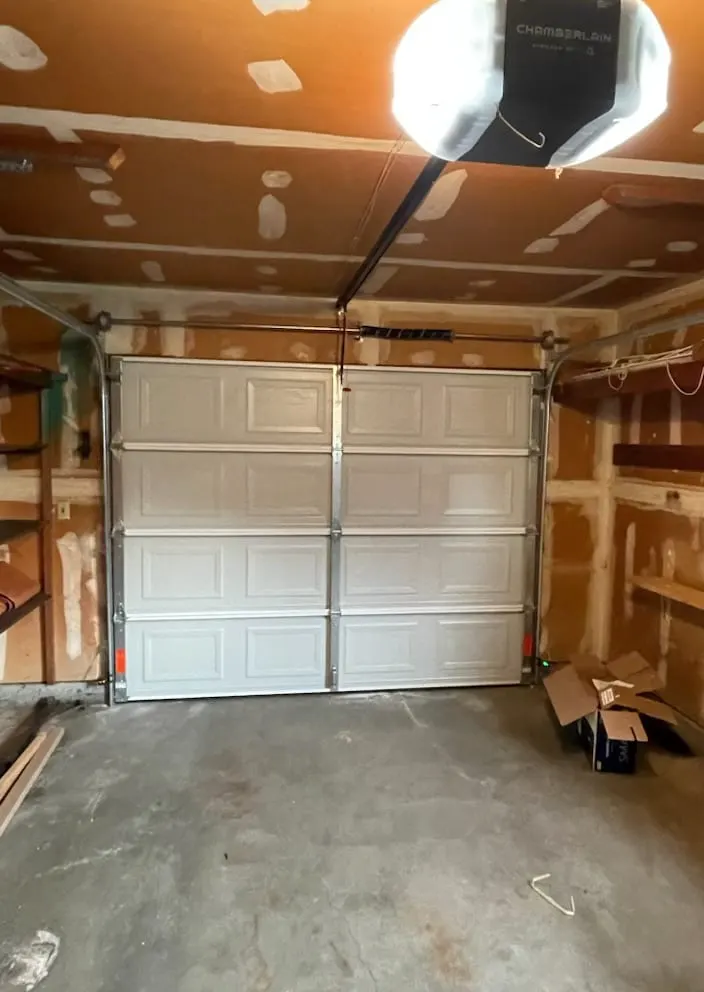
The Mistake Almost Everyone Makes First
The door won't open, so you yank the red cord hanging from the trolley. It feels like the obvious move — disconnect the opener, take matters into your own hands, get the car out and get to work. Most of the time nothing bad happens. But if the real problem is a broken spring, a stuck roller, or a door that's already partway up, that tug can turn a minor inconvenience into a genuinely dangerous situation in about one second.
The cord is tempting because it looks like a simple fix: pull it, push the door, problem solved. What it actually does is far more specific than that, and knowing the difference is what keeps you and your car safe.
What the Release Cord Is Actually For
That cord disconnects the trolley from the opener's drive mechanism — chain, belt, or screw — so the door can move freely by hand instead of being driven by the motor. It exists for exactly two situations: a power outage when you need to get a car out, and an opener malfunction where the motor is fighting the door instead of lifting it smoothly. In both cases, the springs are still doing their job holding the door's weight. The cord just removes the motor from the equation.
When Pulling It Is the Right Call
- Power is out and you need the car out before work or school. Pull the cord, lift the door manually, and it should rise with light, even resistance if the springs are healthy.
- The opener hums, clicks, or strains but the door barely moves, and you've already ruled out an obstructed track. Disconnecting lets you confirm whether the door itself moves freely by hand.
- The opener is being replaced or serviced and needs to be run in manual mode temporarily.
When Pulling It Makes Things Worse
This is the part that gets skipped in the rush. A garage door is balanced by its springs, not by the opener. The motor only ever has to move a door that's already nearly weightless thanks to spring tension. If a spring is broken, cracked, or has lost tension — which shows up as the door feeling unusually heavy, lopsided, or like it's fighting you on one side — the opener may be the only thing currently holding that door up. Pull the release cord in that moment and the door can drop fast, with no motor and no counterbalance to slow it.
- Door is open or partway open: Never pull the cord here unless you're prepared to physically support the full weight of the door immediately. If a spring is compromised, it can fall.
- You hear a loud bang before the trouble starts: That's very often a spring snapping. Disconnecting the opener afterward without supporting the door is how fingers and feet get hurt.
- The door is visibly crooked or one cable looks slack: This points to a broken spring or frayed cable. Manual operation at all is risky until it's repaired.
A Local Wrinkle: Moisture and Cold Snaps
Garages around Lawrenceville take a beating from humidity, heavy rain, and the occasional ice storm, and that environment affects this cord more than people expect. Moisture and pine debris around the garage can cause the release mechanism and trolley to stick or corrode slightly, so the cord sometimes needs a firmer pull than it should. Don't mistake a stuck mechanism for a free one — if it resists, check for rust or debris before assuming it's disengaged. And during ice-storm power outages, when manual release gets used more often out of necessity, that's exactly when a quick visual check of the springs and cables matters most, since cold can make already-weak springs more likely to fail.
How to Pull It Safely
- Close the door fully before disconnecting, whenever possible. A closed door has no stored energy working against you.
- Pull the cord straight down, not at an angle, to avoid jamming the trolley mechanism.
- Test by lifting the door a few inches by hand. It should move smoothly and stay roughly where you leave it. If it feels heavy, slams down, or won't stay put, stop and leave it manual until it's inspected.
- To reconnect, open the door manually until the trolley is near the opener head, then pull the cord toward the door to re-engage, or use the opener's reconnect switch if equipped.
When to Call Lawrenceville Garage Door
If your door feels heavy, uneven, or drops when you try the manual test above, that's a spring problem, not an opener problem, and it's not a DIY fix — springs store enough tension to cause serious injury. Our Spring Repair & Replacement service handles that safely with the right tools and properly rated springs for your door's weight. If you're stuck with a disconnected door after a power outage or storm and need it back in working order fast, our Emergency Garage Door Service covers that too.
If your garage door in Lawrenceville, GA is acting up, give Lawrenceville Garage Door a call — we'll get it sorted safely and get your door back to normal.