
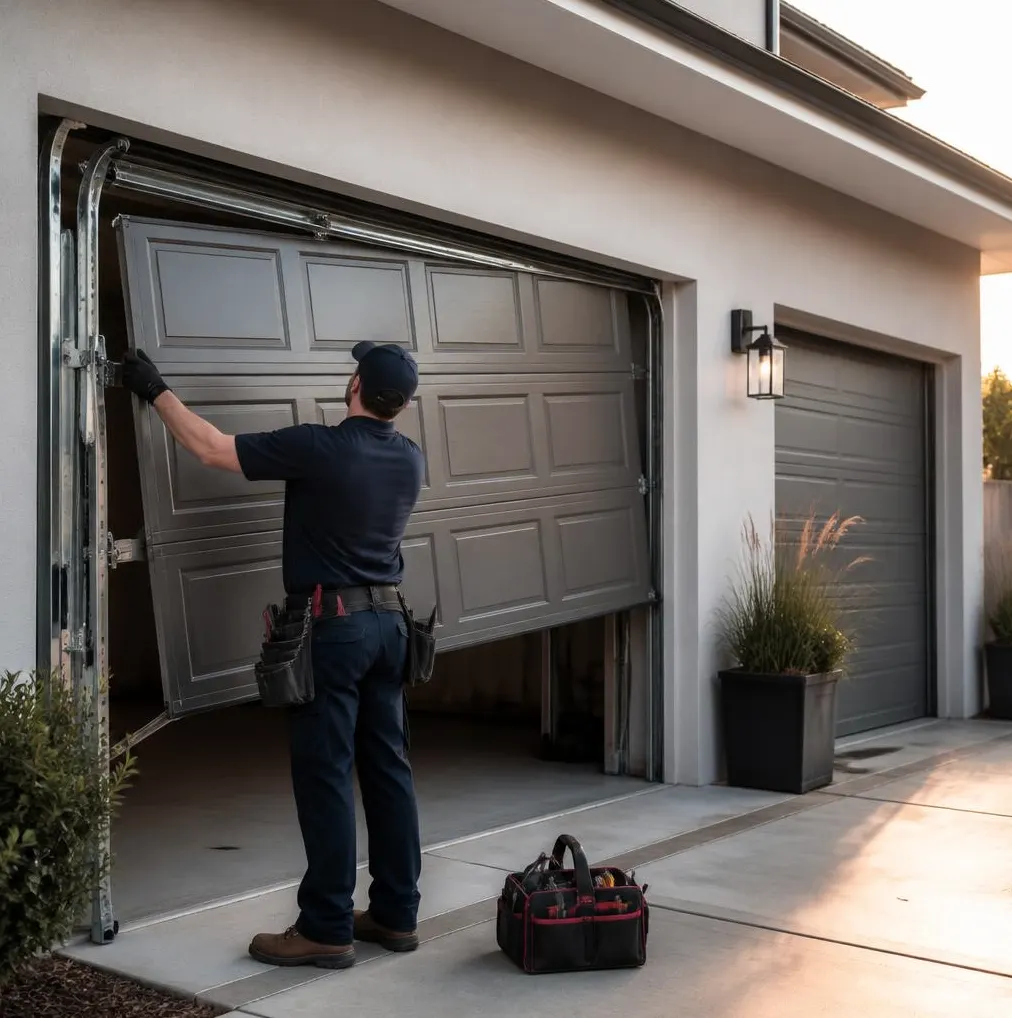
The Moment You Notice Something's Wrong
It's one of those mornings Lawrenceville gets a few times a winter — the air has a real bite to it after an overnight freeze, maybe even a glaze of ice on the windshield. You hit the opener button on your way to work and instead of the usual smooth roll-up, the door groans, shudders, and stalls halfway. Sometimes there's a sharp pop right at the bottom, like the door tore itself loose from the concrete. Other times the opener motor just whines and strains while the door doesn't budge an inch, like it's bolted to the slab.
Neither is normal, and neither should be forced through repeatedly. Here's what's going on and the order a technician would actually check it in.
What You'll Notice Before You Call Anyone
- Door opens a few inches, reverses, or stops partway on its own
- A loud pop, crack, or grinding sound right at the bottom seal
- Opener motor runs and sounds normal, but the door doesn't move (chain or belt slipping)
- Door feels noticeably heavier than usual when lifted by hand
- Visible frost, ice, or a sheet of frozen moisture along the bottom weatherstrip
- The door closes fine at night but won't open cleanly the next cold morning
Causes, Checked in the Order a Technician Would
1. Ice bonding the bottom seal to the driveway slab
This is the first thing to rule out, and it's the most common after one of our ice storms or a heavy rain that freezes overnight. Water pools under the door, soaks into the rubber weatherstrip, and freezes it directly to the concrete. The door isn't broken — it's glued down. Forcing the opener repeatedly in this state is what actually causes damage, usually to the drive mechanism or the bottom panel itself.
The fix: Pour lukewarm (never boiling) water along the seam where the seal meets the slab, let it loosen the bond for a minute, then try the door again using the manual release first to feel resistance before trusting the opener to it.
2. Cold-thickened lubricant on tracks, rollers, and hinges
Standard grease and lithium-based lubricants stiffen in cold temperatures, which slows rollers in the track and adds drag the opener has to fight. This shows up as a sluggish, effortful movement rather than a hard stop.
The fix: A technician cleans old, gummed-up lubricant off the tracks and rollers and reapplies a silicone-based garage door lubricant rated for temperature swings — not WD-40, which attracts dust and breaks down fast, especially with the pine pollen and moisture that settle around garages here most of the year.
3. Spring tension loss as metal contracts in the cold
Torsion springs are tuned to lift a specific weight, and cold metal contracts slightly, which can reduce lift force just enough that the door feels heavier and the opener strains to compensate. If this is the cause, you'll usually notice the door is hard to lift by hand too, not just with the opener.
The fix: This isn't a DIY adjustment — torsion springs are under serious tension and dangerous to handle without the right bars and training. A technician checks spring balance by disconnecting the opener and testing the door by hand; if tension has dropped off or a spring shows wear, spring repair or replacement restores proper balance so the opener isn't doing work it was never built to do long-term.
4. Opener force settings and sensor interference
Cold, damp mornings can fog or mist the photo-eye safety sensors near the bottom of the tracks, which makes the opener think something's blocking the door and causes it to reverse or refuse to close. Separately, force settings calibrated for warmer weather may be too low once the door is heavier or stiffer from the cold.
The fix: Wipe sensor lenses clean and check alignment first — a misaligned sensor is a common and easy culprit. If the opener still struggles, force and limit settings need to be recalibrated for how the door is actually moving now.
5. Brittle or swollen weatherstripping binding in the track
Weatherstripping hardens and loses flexibility in cold temperatures, and if it's already aged from months of heat, humidity, and heavy rain, it can crack, swell unevenly, or bind against the track edges, adding friction exactly where the door needs to move freely.
The fix: Replacing worn weatherstripping is inexpensive relative to the stress it puts on springs and the opener if left alone, and it pays off again come pollen season when a tight seal keeps debris out.
When to Call Lawrenceville Garage Door
If pouring warm water on the seal doesn't solve it, or the door feels heavy and the opener is straining, stop operating it and call us. Our garage door maintenance and tune-up service checks spring balance, lubricates tracks and hardware with cold-rated lubricant, and recalibrates opener force and sensors before small issues turn into a burned-out motor or a snapped cable. If a spring has already lost tension or shows wear, our spring repair and replacement service gets it back to proper balance safely, with the right tools for the job.
If you're dealing with a door frozen shut, stuck halfway, or completely unresponsive right now, our emergency garage door service covers Lawrenceville, Suwanee, Duluth, Snellville, Buford, Lilburn, Dacula, and Grayson. Call Lawrenceville Garage Door today and we'll get your door moving safely before the next cold snap hits.